Most people don’t understand the pros and cons of offset printing versus digital printing, but we understand why. It’s not exactly the most exciting topic out there and it certainly isn’t trending on social media. Plus, at Avalon, we’re printing geeks, so we should know them.
Most organizations have a significant need for printed materials – envelopes, letterhead, forms, marketing materials, business cards, presentations – so it’s a good idea to get a grasp of how to purchase these materials in the most effective way possible.
Overview
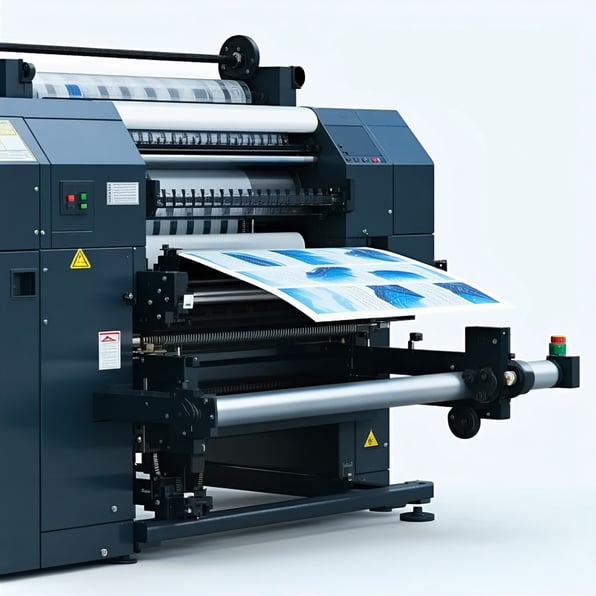
Offset printing is done on printing presses. Digital printing is typically done on high-end copiers – so high end, in fact, that they change the name from copiers to “digital press.” Offset printing is ink on paper; digital printing is toner on paper.
Now for the pros of each – we’re skipping the cons because we’re glass-half-full kind of people:
Pros of Traditional Offset Printing
Color matching: Offset printing allows for an exact color match, as this method uses Pantone Matching System (PMS) inks, rather than CMYK (which stands for Cyan, Magenta, Yellow, and Black, a.k.a, four-color process printing). So, if you need an exact match – say for a logo or other branding components – offset is best. Keep in mind though, that for small printing runs, it can be pricey, so larger runs will be much more cost effective. Which brings us to the next pro of offset printing.
Cost: If you’re planning on a large quantity of prints (at least 1,000), there’s a decent chance you’ll save money with an offset printing approach. Short runs become cost prohibitive for offset printing as the setup is significant in comparison to digital print. If you are printing 1,000,000 postcards for your upcoming political campaign, you want offset. If you are printing 200 invitations to your customer appreciation event, go digital – the costs aren’t even close.
Pros of Digital Printing
Turnaround: Where offset printing typically takes at least a few days if not longer, digital printing can be (theoretically) started in a few minutes. We’ve built our company around the rush needs of our clients. You procrastinated? No problem. You took every last minute possible to perfect your presentation? No big deal. Whatever the reason is, turnaround is much faster than offset printing.
Changes: If your company is like ours, things change. Frequently. We are adding people, services, offices – you name it – quite frequently. The speed of business today is lightning fast and frankly, in most cases, it just makes more sense to print short runs of materials so that you don’t end up with a warehouse full of marketing materials or stationery that has your old logo, address, or whatever all over them. Digital printing allows you to stay nimble and make the changes to your materials on a whim without wasting money.
Assembly: For collated projects with a lot of assembly (think training binders with tabs, or short runs of large packets), digital printers can collate as they go and save significant time and, thus, enhance the cost gap for short runs. Advantage digital.
Cost: If you have a short-run project, the lack of a lengthy setup process allows for more cost-effective printing of smaller projects. Your first brochure printed digitally may cost you a couple bucks, whereas your first brochure printed offset will cost you at least a couple hundred bucks. Sure, there’s a gray area where costs start becoming comparable, but there’s no hard line on what volume that is. Every project is different and would have to be evaluated on a case-by-case basis. However, for anything less than 1,000, it’s not going to be close, so choose digital printing.
As always, we’re happy to discuss how these ideas apply to your current or upcoming projects; contact Avalon today!